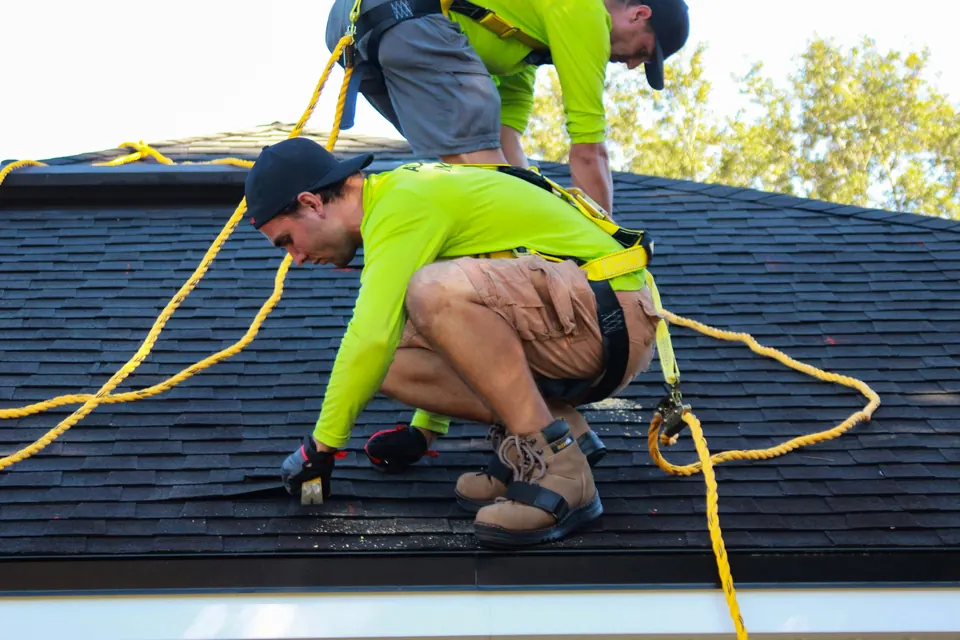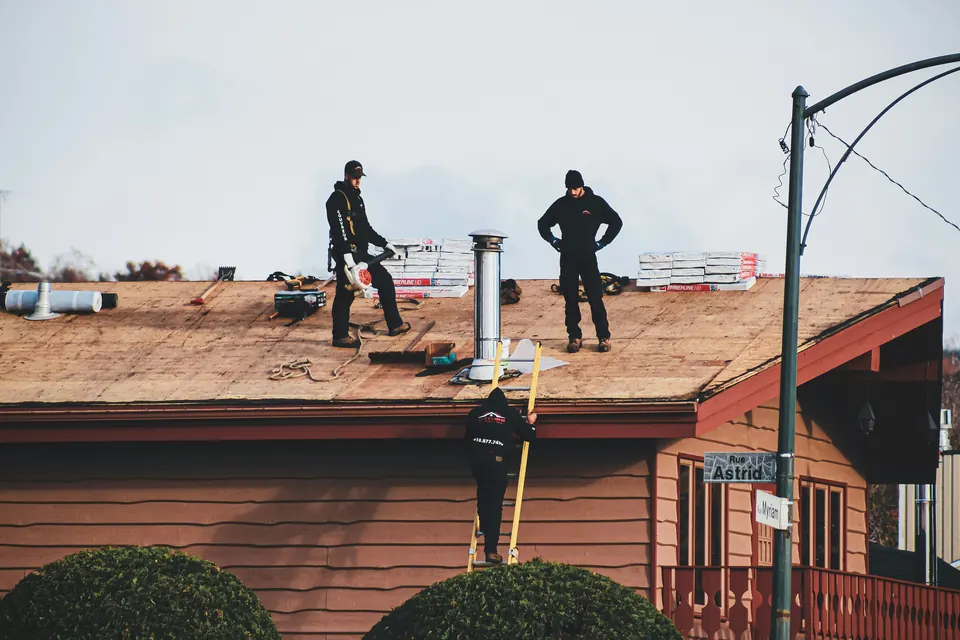
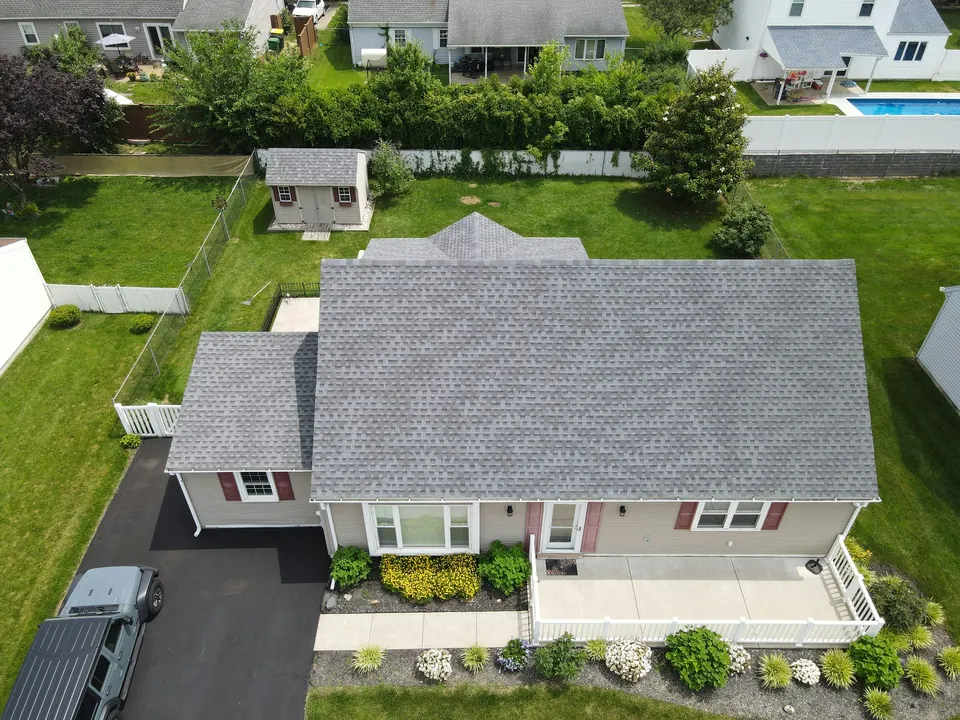
A full replacement means the old shingles come off down to the wood, any rotted decking gets swapped, and new underlayment, flashing and shingles go on.
What it costs
Long Island roofers who publish prices land in roughly the same place for asphalt shingles:
- $8,000 to $15,000, with most homeowners paying around $11,500 (All American Home Improvement, 2025)
- $8,000 to $25,000 for standard asphalt shingle roofs (Cigna Roofing, March 2026)
Labor is 40 to 60 percent of the total, according to Cigna. The full breakdown by material, town and cost driver is in our roof replacement cost guide.
Permits differ by town
There is no single Long Island rule. The Town of Islip’s building division says no permit is required to replace roof covering, siding or facade unless structural elements change. Brookhaven lists a roof-over permit type on its permits page. Other towns and incorporated villages set their own rules, so call your building department or have the roofer confirm in the contract who handles it.
Roof-over or tear-off
A roof-over puts new shingles on top of the old layer. It costs less up front, but you cannot see the wood underneath, and the new roof does not last as long. If your house already has two layers, plan on a tear-off.
What the quote should name
Two quotes for “a new roof” can describe very different jobs. Ask each roofer to list these in writing so you can compare them line by line:
- Tear-off: how many layers are coming off, and is disposal included
- Decking: the price per sheet if rotted plywood needs replacing, since nobody knows until the old roof is off
- Ice and water shield: where it goes, at minimum along the eaves and in valleys
- Underlayment: the product name
- Shingles: the brand and the exact line, not just “architectural”
- Flashing: new or reused at chimneys, walls and vents
- Ventilation: ridge vent, box vents, or what is there now
- Permit: who pulls it, if your town needs one
- Warranty: the manufacturer warranty and the roofer’s own workmanship warranty, with years for each
- Flashing and ridge ventMetal at chimneys, walls and vents, and the vent along the peak.
- ShinglesThe brand and product line should be on the quote.
- Drip edge and starter stripMetal along the roof edge, then the first sealed row of shingles.
- UnderlaymentA synthetic sheet over the rest of the deck.
- Ice and water shieldSelf-sealing membrane along the eaves and in valleys.
- Roof deckPlywood or OSB. Rotted sheets get replaced, priced per sheet or per square foot.
- RaftersThe framing underneath. Only touched if damaged.